Indigenous care
Indigenous Counselling
Counselling shouldn’t begin with you explaining who you are. We’re an Indigenous-led practice on Stó:lō territory, and our counsellors already understand the ground you’re standing on — colonisation, residential schools, the weight carried down through families. Our counsellors are FNHA-registered and bill FNHA directly. Sessions run by video or phone anywhere in British Columbia, or in person in Chilliwack.
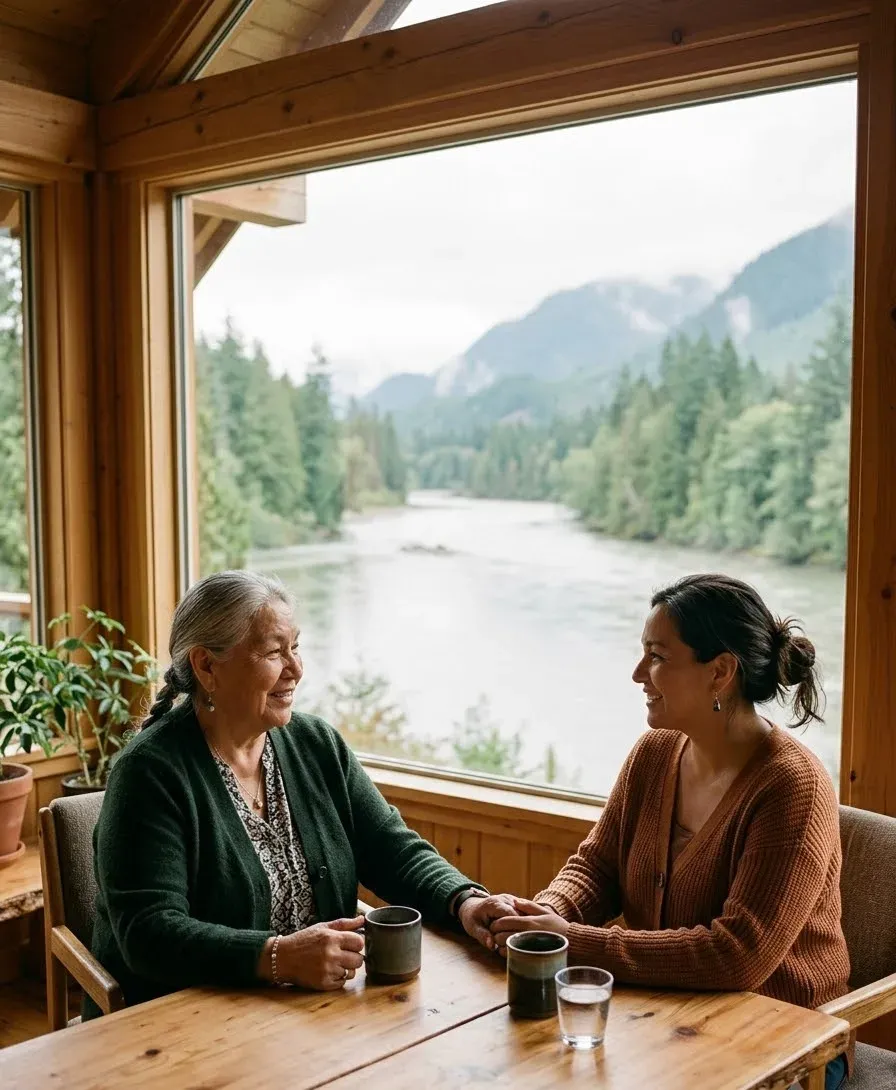
- Indigenous-led, on Stó:lō territory
- Our counsellors are FNHA-registered, and we bill FNHA directly
- By video or phone anywhere in BC, or in person in Chilliwack
What this is
Counselling for First Nations people in British Columbia, delivered by an Indigenous-led practice on Stó:lō territory. It is ordinary mental-health counselling — the things anyone would bring to a counsellor — held by people who don’t need the context explained to them.
That difference is small on paper and large in a room. It means you aren’t spending your first sessions teaching your counsellor the history. It means the things that are hardest to say are things they have heard before, and heard without flinching.
Who it’s for
- First Nations people in British Columbia, on or off reserve.
- Anyone who has tried counselling before and left because it didn’t fit.
- People who want a counsellor who already understands intergenerational and residential-school trauma.
- People outside the Lower Mainland — we work by video and phone across the province.
Our approach
We practise Two-Eyed Seeing — the traditional knowledge of the Stó:lō people held alongside modern clinical care, neither one asked to make room for the other. Our counsellors are trauma-informed and culturally safe. Culture isn’t an add-on at the end of the hour; it’s the ground the hour stands on.
You set the pace, and you decide what gets talked about.
What it costs
Our counsellors are FNHA-registered, and we bill FNHA directly — eligible members pay nothing out of pocket, and there’s no claim to file afterwards. If you’re covered by NIHB instead, or you’re not sure what you’re covered by, ask us. We’d rather check than have you go without.
Getting started
Send us a message or call. We’ll help you check your eligibility, match you with a counsellor, and book your first session.
FAQ
Common questions
What makes this different from any other counselling?
You don’t have to start by explaining what residential school was, or why your family is the way it is. Our counsellors are culturally safe and trauma-informed, and they come to the first session already understanding that history — so the work can start with you, not with the background.
Do I have to live on reserve?
No. We work with First Nations people across British Columbia, on or off reserve. If you aren’t sure what you’re eligible for, tell us and we’ll help you check before you book anything.
Is Indigenous counselling covered by a benefit plan?
For eligible First Nations members in BC, FNHA’s mental-health benefit may cover counselling sessions. Our counsellors are FNHA-registered and we bill FNHA directly, so eligible members pay nothing out of pocket. We’ll help you check your eligibility before your first session.
I live nowhere near Chilliwack. Can I still see someone?
Yes. We deliver counselling by video or phone anywhere in British Columbia — being outside a major centre shouldn’t decide whether you get care. If you’d rather sit in a room with someone, you’re welcome at our Chilliwack centre.
What if I’ve never done counselling before?
Most people haven’t. There’s nothing to prepare and no right way to start. Get in touch, tell us as much or as little as you want to, and we’ll match you with a counsellor and book a first session.
Get started
Book your first session
Tell us a little about what you’re looking for. We’ll help you check your eligibility, match you with a counsellor, and book your first session.
Call us at +1 604-983-4974 or fill out the form, and a representative will reach out.